- Home
- All Filaments
- PLA Silk Rainbow Filament – Gradient Color Transition, 1.75mm, 1kg
Ends in
00
D
:
00
H
:
00
M
:
00
S
PLA Silk Rainbow Filament – Gradient Color Transition, 1.75mm, 1kg
Buy more, save more.
View bulk pricing ›
0 rolls


📍 Your location: United States
Fast USA ShippingSilk Candy —In stock in USA
Order today → Estimated Sep 17–24
Couldn't load pickup availability
Payment
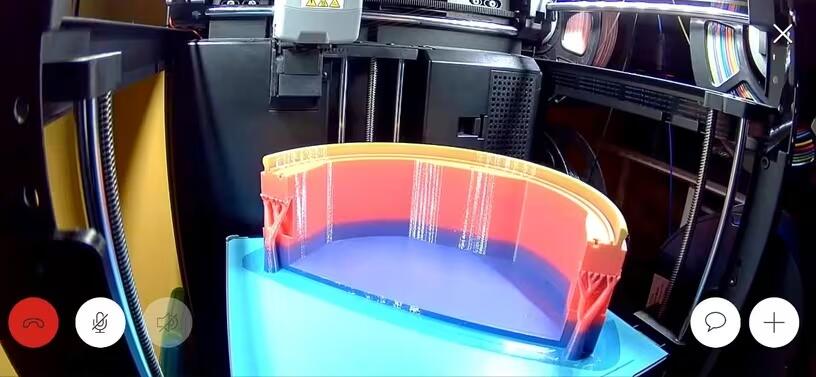
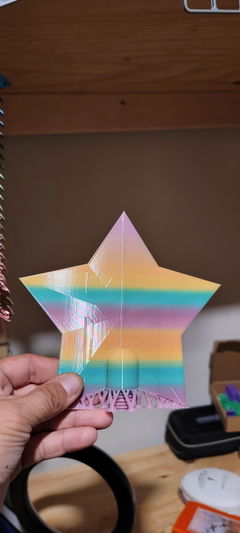
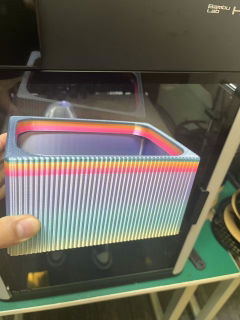
Fill every print with flowing color using Filazoo PLA Silk Rainbow Filament. Multiple colors transition gradually along the filament, creating a vibrant gradient that develops naturally as the model prints.
Its smooth, silk-like sheen enhances each color and gives finished models a polished, luminous appearance without painting or changing filament. It is ideal for vases, dragons, sculptures, figurines, gifts, decorations, and other models designed to showcase color.
Key Features
- Multiple colors transition gradually along one filament strand
- Smooth, reflective silk-like finish
- Creates unique multicolor prints with a single nozzle
- No filament switching or painting required
- Each model develops its own natural color arrangement
- Consistent extrusion and reliable feeding
- Low warping under suitable printing conditions
- Ideal for large decorative and display models
- Available in two rainbow color palettes
Diameter:
1.75 ± 0.02 mm*
Net Weight:
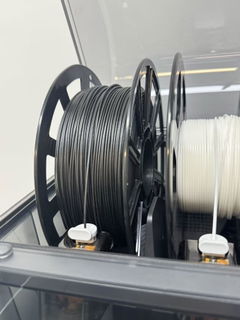
1 kg per spool
Gross Weight:
Approximately 1.3 kg per spool*
Filament Length:
Approximately 330 m*
Care Tip:
Keep the filament in a sealed bag or dry box with fresh desiccant. Protect it from moisture, direct sunlight, and high temperatures.
Share
Need to Know
Product Features
Service
- Free Shipping
- 15-Day Easy Returns
- Lifetime Product Support
Payment
Secure checkout is available with these payment methods:


FAQ
What is PLA Silk Rainbow filament?
PLA Silk Rainbow carries a sequence of colors along one strand, so the model shifts gradually through them as the filament feeds. The silk finish adds a reflective sheen on top of the gradient — silk PLA explained covers how that shine is produced and how to keep it.
Do I need a multicolor printer?
No. Every color sits in one continuous 1.75mm strand, so a compatible single-extruder printer produces the full gradient. To combine it with other spools on a multi-material setup, see setting up Filazoo filament in your AMS.
Does it contain real silk?
No. "Silk" describes the smooth, reflective appearance — there are no natural silk fibers in it. The sheen comes from the polymer formulation, as silk PLA explained sets out.
How does the filament change color?
The colors are manufactured sequentially along the strand. The printer doesn't select or mix anything — the color simply changes as the spool feeds through. Consumption, not height, drives the transition.
Can I choose where each color appears?
Not precisely on a normal continuous print. Starting point, transition length, model size, infill, wall count, and total filament consumed all determine where each color lands.
You can print a small sample first, or manually advance the filament to start nearer a preferred color, though that uses extra material — changing filament mid-print covers doing it cleanly.
Will every model have the same color pattern?
Not necessarily. It depends where in the color sequence printing begins and how much material the model consumes, so two copies can differ noticeably. For a matched pair, print them together in one job.
Why does my small model show only one color?
A small model may not consume enough filament to reach the next transition. Print it larger, scale it up, or batch several objects on one plate to pull more of the sequence through. To start nearer a specific color, changing filament mid-print covers advancing and purging safely.
Do colors change by model height?
Not always. Color progression follows filament consumption, not height — infill, wall count, model width, supports, and the number of objects on the plate all change how fast the colors move. A tall thin vase shifts color much faster than a wide solid base.
Can I predict the final color arrangement in my slicer?
Not accurately. A standard slicer can't render the gradient without knowing the exact transition length and your starting position on the spool. It will estimate material consumption reliably, but the final color arrangement still varies — what a calibration print tells you is a better use of a test print.
What is the difference between Silk Candy and Silk Macaron?
Both run the same rainbow sequence in a different register: Silk Candy uses brighter, more saturated shades, while Silk Macaron keeps to a softer pastel palette. Check the color swatches on this page for the exact shades in each. Silk PLA explained covers how the finish behaves across our whole Silk range.
Why does my finished print not look shiny?
Usually low nozzle temperature, too much speed, inconsistent extrusion, or frequent changes in outer-wall speed — silk needs heat and steady flow to develop its sheen. Start from the recommended profile and change one setting at a time. How to get the best finish from Silk PLA covers what matters most.
Is PLA Silk Rainbow suitable for functional parts?
For light-duty objects, yes — but it's designed for looks. For heavily loaded, impact-resistant, heat-resistant, or safety-critical parts, choose a functional material: PLA+ vs. PLA Basic covers the everyday step up, and PC vs. ABS vs. ASA vs. PETG the engineering end.
Can it be sanded or painted?
You can, but sanding dulls the silk sheen and painting covers the rainbow entirely — which removes both of the reasons to use this filament. Post-processing is usually only worth it for a deliberately customized finish.
Is it compatible with Bambu Lab AMS?
It uses the standard 1.75mm diameter that AMS and similar units expect, with the tolerance held tight enough for reliable automatic feeding. Our AMS and multi-material setup walkthrough covers getting spools recognized and feeding smoothly. If you need spool dimensions for a specific unit, get in touch before ordering.
How can I tell whether it has absorbed moisture?
Popping sounds, bubbles, heavy stringing, inconsistent extrusion, and a rough or uneven surface all point to moisture. Dry it before printing again — the Printer Settings tab above lists the times, and how to dry filament at home compares ovens, dry boxes, and dedicated dryers.
What's in the Box
* The color and texture of the filament are subject to the physical product. Images are for reference only.