Free Shipping
15-Day Easy Returns
Lifetime Product Support
Secure Payment
 Ends in
00
D
00
H
00
M
00
S
Ends in
00
D
00
H
00
M
00
S
PC Filament – Tough, Heat-Resistant Polycarbonate, 1.75mm, 1kg
PC Filament – Tough, Heat-Resistant Polycarbonate, 1.75mm, 1kg
$22.42
/roll
(Lowest price for 20+ rolls)
Buy more, save more.
View bulk pricing
1 pcs
Free Shipping
5 pcs
$25.41
15% OFF
10 pcs
$23.92
20% OFF
20 pcs
$22.42
25% OFF
0 rolls
Black

White

Yellow

Green

Red

Skin

Brown

Light purple

Purple

Blue
Subtotal
0 items
Your location: United States
Black —Ships internationally
Estimated Sep 24 – Oct 6
Payment
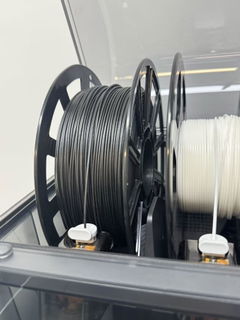
Print tough, rigid, and temperature-resistant functional components with Filazoo PC Filament. Polycarbonate is suited to demanding prototypes, machine parts, protective housings, tools, brackets, and components requiring greater impact and heat performance than standard consumer filaments.
PC requires a high-temperature hotend, heated bed, enclosed build chamber, and careful moisture control. It is recommended for experienced users with compatible equipment.
Key Features
- High toughness and impact resistance
- Good rigidity and mechanical strength
- Better temperature resistance than standard PLA or PETG
- Suitable for demanding functional components
- Good electrical-insulation characteristics
- Can be drilled or machined carefully
- Designed for high-temperature printers
Available Colors
Black, White, Yellow, Green, Red, Skin, Brown, Light Purple, Purple, Blue.
Recommended Applications
Protective housings, strong brackets, workshop tools, machine components, lighting fixtures, automotive prototypes, robotics parts, structural prototypes, electronic enclosures, and heat-exposed components.
Starting Print Profile
275 °C nozzle, 110 °C bed, 40 mm/s, 0.20 mm layer height, enclosed printer, and dry-box feeding.
Need to Know
Product Features
Service
- Free Shipping
- 15-Day Easy Returns
- Lifetime Product Support
Payment
Secure checkout is available with these payment methods:



What's in the Box
* The color and texture of the filament are subject to the physical product. Images are for reference only.