- Home
- All Filaments
- Filazoo ASA-CF Filament – UV-Resistant Carbon Fiber, 1.75mm, 1kg
Ends in
00
D
:
00
H
:
00
M
:
00
S
Filazoo ASA-CF Filament – UV-Resistant Carbon Fiber, 1.75mm, 1kg
Buy more, save more.
View bulk pricing ›
0 rolls


📍 Your location: United States
Black —Ships internationally
Estimated Sep 24 – Oct 6
Couldn't load pickup availability
Payment
Engineered for demanding functional parts, Filazoo ASA-CF combines the outdoor durability of ASA with carbon-fiber reinforcement for improved rigidity, dimensional stability, and a refined matte finish. Its UV and weather resistance make it especially suitable for outdoor equipment, automotive components, tools, fixtures, enclosures, and precision prototypes.
Engineering Performance Built for Outdoor Use
Filazoo ASA-CF is a carbon-fiber-reinforced ASA filament developed for strong, rigid, and dimensionally stable functional parts. It retains ASA’s resistance to UV exposure and changing weather conditions while the carbon-fiber reinforcement helps reduce shrinkage and improves stiffness.
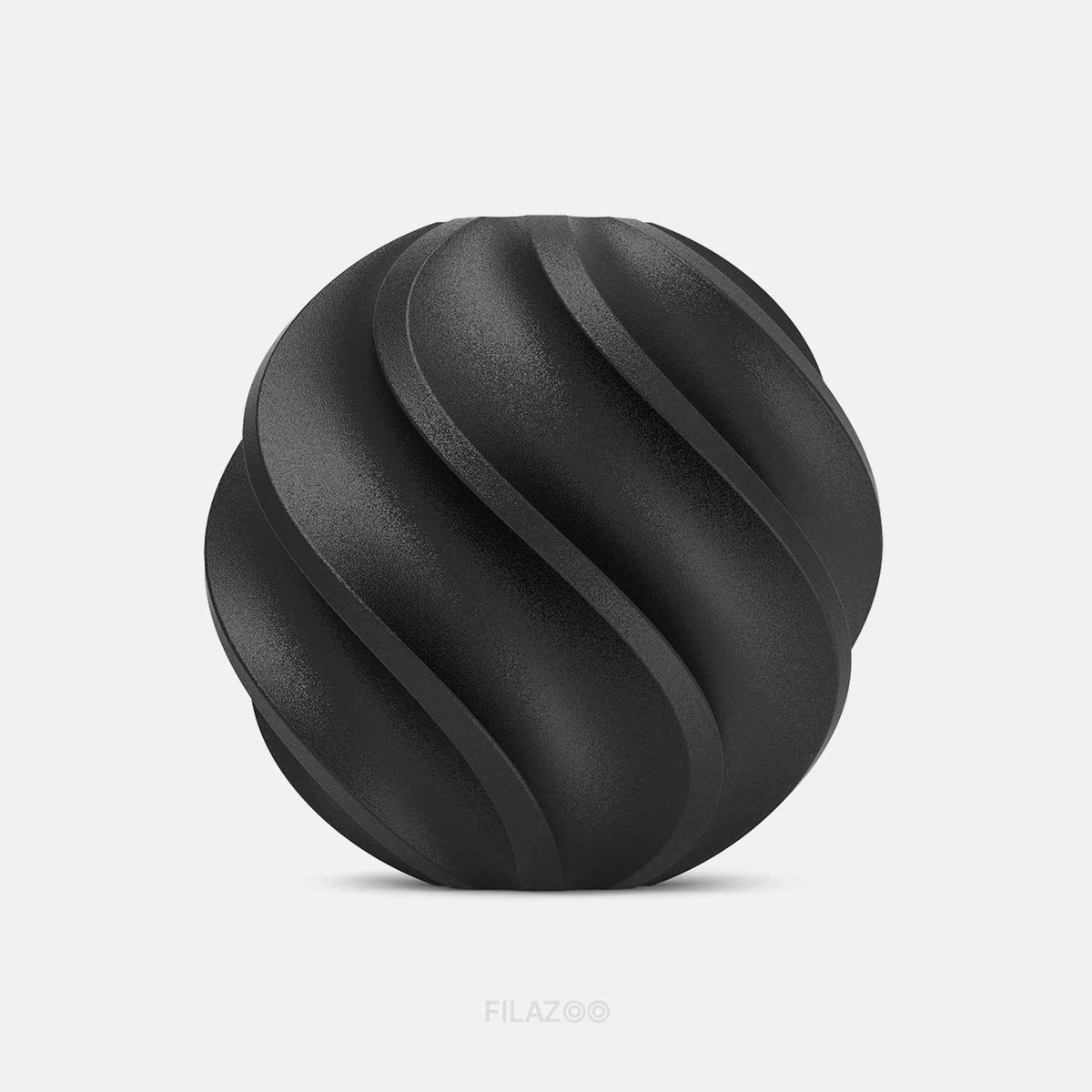
The naturally matte, low-gloss surface gives printed parts a clean technical appearance while helping make layer lines less noticeable. This makes ASA-CF an excellent choice for functional prototypes and end-use components that must look professional and perform reliably.
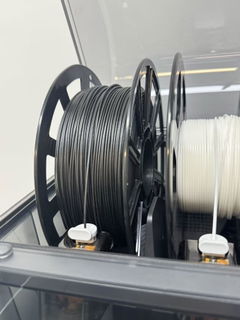
For the best results, print ASA-CF in an enclosed printer using a wear-resistant nozzle. Proper ventilation is recommended when printing ASA-based materials.
Feature Highlights
- UV and Weather Resistant: Designed for components exposed to sunlight, changing temperatures, and outdoor environments.
- Carbon-Fiber Reinforced: Increased rigidity and dimensional stability for functional engineering applications.
- Excellent Dimensional Accuracy: Carbon-fiber reinforcement helps control shrinkage and warping for precise, repeatable parts.
- Heat-Resistant ASA Base: Performs better in elevated-temperature applications than common PLA and standard PETG materials.
- Professional Matte Finish: Produces a refined, low-gloss surface that helps reduce visible layer lines.
- Built for Functional Parts: Ideal for brackets, housings, fixtures, automotive accessories, outdoor equipment, and engineering prototypes.
Recommended Applications
- Outdoor equipment and protective housings
- Automotive interior and exterior accessories
- Functional prototypes, jigs, fixtures, and manufacturing tools
- Electronic enclosures and robotics assemblies
- Mounting brackets and structural components
- Drone, RC, replacement, and low-volume end-use parts
Printing Guidance
- Use a hardened-steel, ruby, or similarly wear-resistant nozzle; carbon fiber rapidly wears standard brass nozzles.
- A 0.6 mm nozzle is recommended for dependable material flow and reduced clogging risk.
- Print inside an enclosure, avoid cold airflow, and allow the component to cool gradually before removal.
- Use a brim for large parts or models with sharp corners.
- Dry the filament if you notice popping, bubbles, rough surfaces, or inconsistent extrusion.
- Print in a well-ventilated area because ASA materials may produce noticeable fumes.
Share
Need to Know
Product Features
Service
- Free Shipping
- 15-Day Easy Returns
- Lifetime Product Support
Payment
Secure checkout is available with these payment methods:

Overview
Precision for Load-Bearing Gear
Carbon-fiber reinforcement holds tight tolerances at any scale, so stands, mounts, and protective cases keep a precise fit and finish print after print — no sagging, no warped edges, no wasted parts.
Superior Outdoor Durability
FAQ
What is ASA-CF filament?
ASA-CF combines ASA polymer with carbon-fiber reinforcement: you keep ASA's weather and UV resistance while gaining rigidity, dimensional stability, and a matte technical finish. ABS-CF, ABS-GF, PETG-CF, and ASA-CF compared sets out what each of our filled materials is actually for.
Is ASA-CF suitable for outdoor parts?
Yes — this is what it's built for. ASA resists UV and weathering better than any other base material we stock, which makes ASA-CF a strong choice for outdoor housings, brackets, automotive accessories, and equipment parts that live in sunlight. PC vs. ABS vs. ASA vs. PETG compares the options on real UV and temperature terms.
How is ASA-CF different from standard ASA?
Carbon fiber makes it more rigid and dimensionally stable than standard ASA, with a more refined matte surface and reduced shrinkage. The trade-off is real: added rigidity means less flexibility and lower impact tolerance than unfilled ASA. What is carbon-fiber and glass-fiber filament? explains that stiffness-versus-toughness trade properly.
Does ASA-CF require an enclosed printer?
Strongly recommended. ASA-based materials want a warm, stable, draft-free environment; an enclosure cuts the risk of warping, cracking, and layer separation, especially on large models. Warping 101 explains the shrinkage physics behind that.
Do I need a hardened-steel nozzle?
Yes. Carbon fiber rapidly wears brass nozzles — the opening enlarges and your dimensional accuracy goes with it. Use hardened steel, ruby, or another wear-resistant nozzle. Brass vs. hardened steel covers how quickly that wear happens and how to spot it.
What nozzle size should I use?
A 0.6mm hardened-steel nozzle gives the most reliable flow and the least clogging risk. A 0.4mm wear-resistant nozzle works too, with a properly calibrated material profile. Nozzle range is published on every spool — how to read a filament spec sheet explains what those numbers mean.
Should ASA-CF be dried before printing?
Recommended, especially after the spool has been open in humid air. Moisture causes popping, bubbles, rough surfaces, stringing, and inconsistent extrusion. Start at 80–90°C for roughly 6–8 hours. How to dry filament at home compares the equipment that can hold that temperature safely.
What build-plate temperature should I use?
Start between 90°C and 110°C, with a suitable build surface and adhesive where needed. Large parts also benefit from a brim and a fully preheated enclosure. If the first layer still lifts, our bed adhesion troubleshooting guide works through the causes in order.
Is ASA-CF stronger than regular ASA?
Stiffer and more dimensionally stable, yes. Whether that counts as "stronger" depends on the type and direction of load — carbon fiber improves rigidity but can reduce flexibility and some forms of impact resistance. What is carbon-fiber and glass-fiber filament? unpacks the difference between the two.
Can ASA-CF be used for load-bearing components?
It suits many rigid functional parts, fixtures, brackets, and engineering prototypes. Real performance depends on geometry, print orientation, wall thickness, infill, layer adhesion, temperature, and applied load — and safety-critical parts need application-specific engineering evaluation. Weak layer bonding is the usual failure mode: see why parts split along layer lines.
Is ASA-CF compatible with every filament system?
Not necessarily. Carbon-fiber filaments are abrasive and relatively rigid, so use only feeders, nozzles, and automatic material systems approved for fiber-reinforced filament. An external spool holder is often the better option when the printer's automatic feed isn't rated for abrasives. See setting up Filazoo filament in your AMS and choosing the right nozzle.
Does ASA-CF produce fumes while printing?
ASA-based materials release noticeable odors and emissions when heated. Print in a well-ventilated area and follow your printer manufacturer's ventilation and filtration guidance. If you can't guarantee ventilation — a classroom or shared room, say — pick a lower-temperature material: our classroom filament guide covers the reasoning.
Can ASA-CF parts be used near heat?
It handles more heat than PLA and most standard PETG. Actual service temperature depends on formulation, load, part design, print quality, and how long the heat lasts. PC vs. ABS vs. ASA vs. PETG compares the realistic options when heat is the deciding factor.
Should I choose the 250 g or 1 kg spool?
Take 250g for testing, profile development, small prototypes, or occasional specialist parts. Take 1kg for larger projects, repeat production, and regular engineering use. If you're printing at volume, our print farm partner program covers bulk pricing and free sample runs.
Reviews
- 5 stars: 2 (100%)
- 4 stars: 0 (0%)
- 3 stars: 0 (0%)
- 2 stars: 0 (0%)
- 1 star: 0 (0%)
I printed a lot with ASA CF this week, and the effect was very good
Haven’t use it , but filazoo is good brand as my friend advise it
What's in the Box
* The color and texture of the filament are subject to the physical product. Images are for reference only.
Filament with spool